
Revolutionizing Fashion: Enhancing Apparel Management with RFID Care Labels
Experience the future of retail with seamless RFID technology in clothing. Streamline supply chains, ensure authenticity, and elevate the shopping journey for customers.
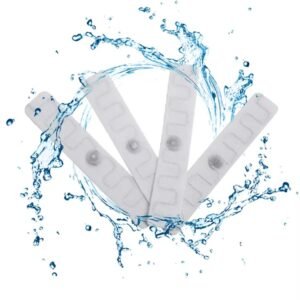
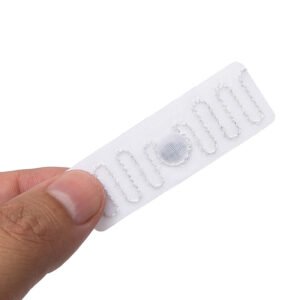
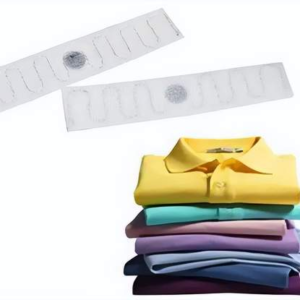
UHF (Ultra-High Frequency) RFID laundry tags are widely used in hospitals, hotels, uniform services, and industrial laundry operations. Correct installation ensures tag durability, stable reads over long distances, and long service life through repeated industrial washes.
Problem: Improper heat-sealing can cause tag detachment, reduced read range, or chip failure during washing, drying, and ironing.
Data: UHF laundry tags are rated for 200–250+ industrial wash cycles when installed using correct heat, pressure, and dwell time.
Conclusion: Following standardized heat press parameters maximizes tag lifespan, maintains reliable read distances (up to 4–10 meters depending on reader and environment), and ensures operational efficiency.
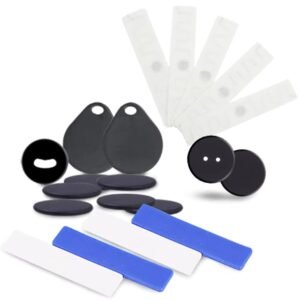
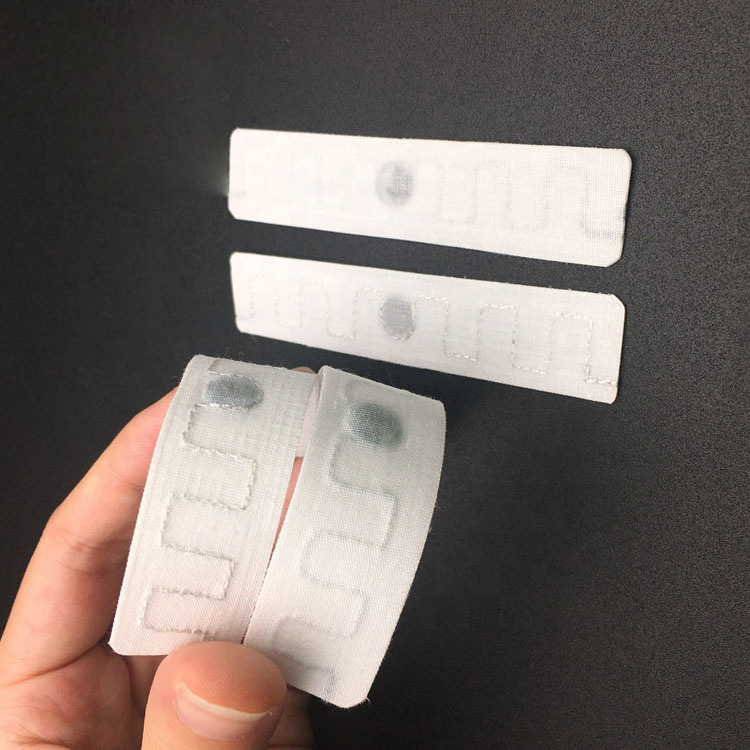
Round Chip Tags (UHF):
Compact form factor for flexible placement
Read range: typically 6–9 m with standard industrial UHF readers
Wash durability: ~200 cycles
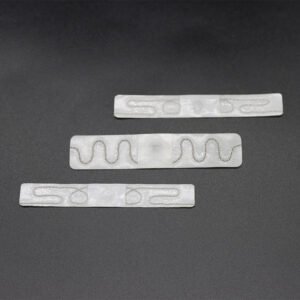
Square Chip Tags (UHF):
Larger antenna surface for improved read stability
Read range: up to 6–12 m under industrial conditions
Wash durability: ~250 cycles
Both types support UHF EPC Gen2 / ISO 18000-6C protocols, compatible with UHF industrial readers and handheld scanners.
| Chip Type | Temperature | Pressure | Time | Wash Durability |
|---|---|---|---|---|
| Round | 190–205°C | Level 5–6 | 15–20s | ~200 cycles |
| Square | 225–230°C | Level 5–6 | 20–30s | ~250 cycles |
Use mid-range pressure on heat press machines. Adhesive bonding should fully cure before washing.
Prepare Textile: Ensure the fabric is clean, dry, and flat. Avoid seams, folds, and metal components.
Place Tag: Adhesive side down in a flat area of the garment.
Set Heat Press: Adjust temperature, pressure, and dwell time per tag type.
Apply Heat: Perform a single press cycle. Do not repeat presses on the same tag.
Cooling: Allow textile and tag to cool completely before handling or washing to ensure proper adhesive bonding.
Post-Installation Verification: Use a UHF RFID reader to verify stable reads and proper tag function.
Exceeding recommended temperature, damaging the chip or antenna
Applying too little pressure, causing weak adhesion
Tag placement on seams, folds, or high-stress areas
Washing before adhesive fully cures
Correct installation ensures consistent read performance and extended tag life.
Properly installed UHF RFID laundry tags withstand:
High-temperature washing and drying
Strong detergents and chemical exposure
Mechanical agitation and pressing
Frequent handling and folding
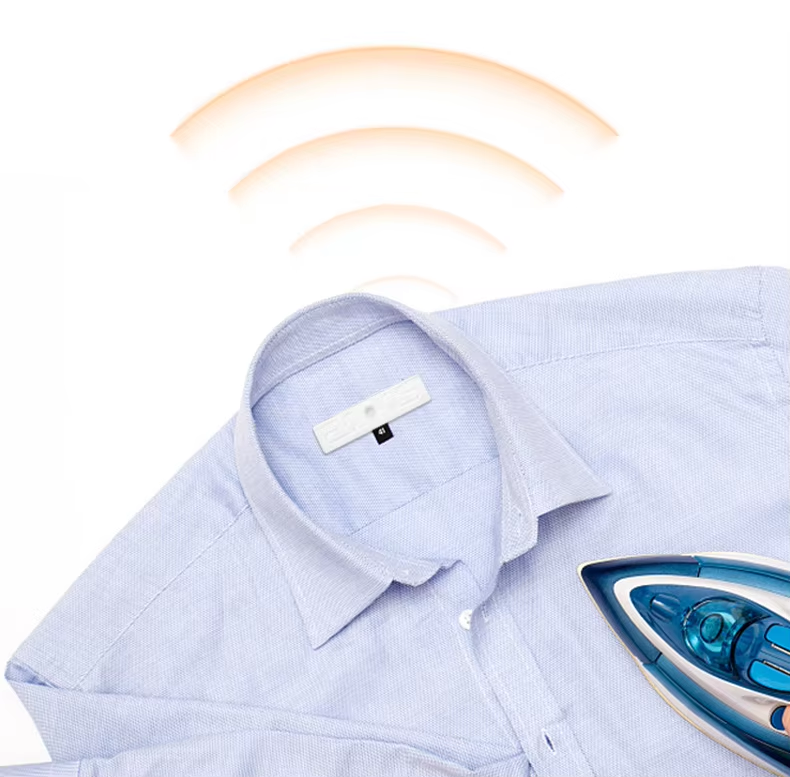
Tags maintain reliable read distances and durability, making them ideal for:
Hospital linen and uniform tracking
Hotel laundry operations
Industrial workwear services
Textile rental and logistics management
Q: Are these tags compatible with all readers?
A: Yes, UHF tags comply with EPC Gen2 / ISO 18000-6C, readable by standard UHF industrial readers.
Q: How many washes can the tags withstand?
A: Round tags ~200 cycles; square tags ~250 cycles under industrial conditions.
Q: Can tags be removed and reused?
A: No, heat-sealed tags are designed for permanent adhesion.
Q: Can I test samples before bulk ordering?
A: Yes, samples are available for testing under real washing and drying conditions.
MOQ depends on tag type and customization
Custom printing, sizes, and chip options available
Payment: T/T or L/C; shipping via DHL, FedEx, UPS
CTA: Contact us today to request UHF RFID heat-sealed laundry tag samples or bulk orders to enhance textile tracking efficiency.
Newest trends and common knowledge in RFID laundry tags.
Experience the future of retail with seamless RFID technology in clothing. Streamline supply chains, ensure authenticity, and elevate the shopping journey for customers.
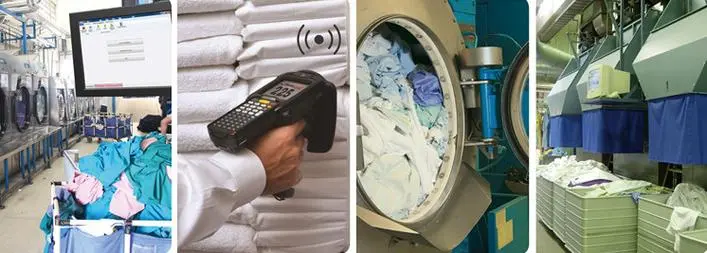
Efficient textile management in hospitality, healthcare, and commercial laundry uses heat-sealed RFID tags for real-time tracking, inventory control, and operational efficiency.
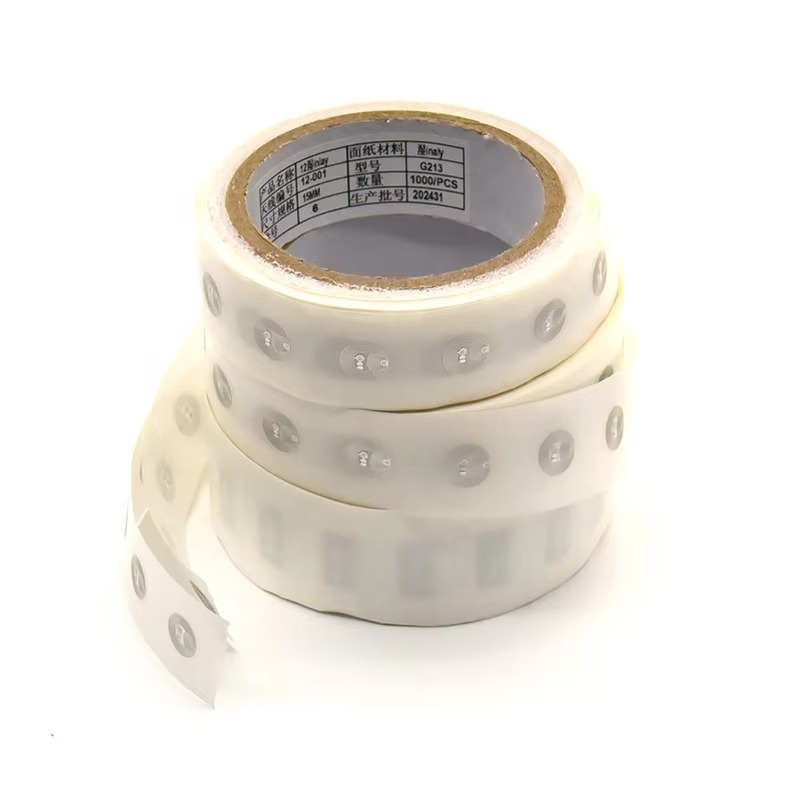
Our blank white NFC Stickers, featuring the advanced NXP NTAG215 NFC chip, are perfect for a wide range of applications.
Didn’t find what you want? Ask our manager for help!