Textile and PPS RFID Laundry Tags for Industrial Laundries
Bonded, laminated and encoded in our own plant in Jiangmen — industrial RFID laundry tags in textile and rigid PPS formats, sewn-in or heat-sealed, tested against your wash recipe rather than a catalogue one. 500 pcs minimum, samples out in two days, 1,000 pcs in 2 days once the PO is confirmed.
From inlay to encoded tag, without leaving the building
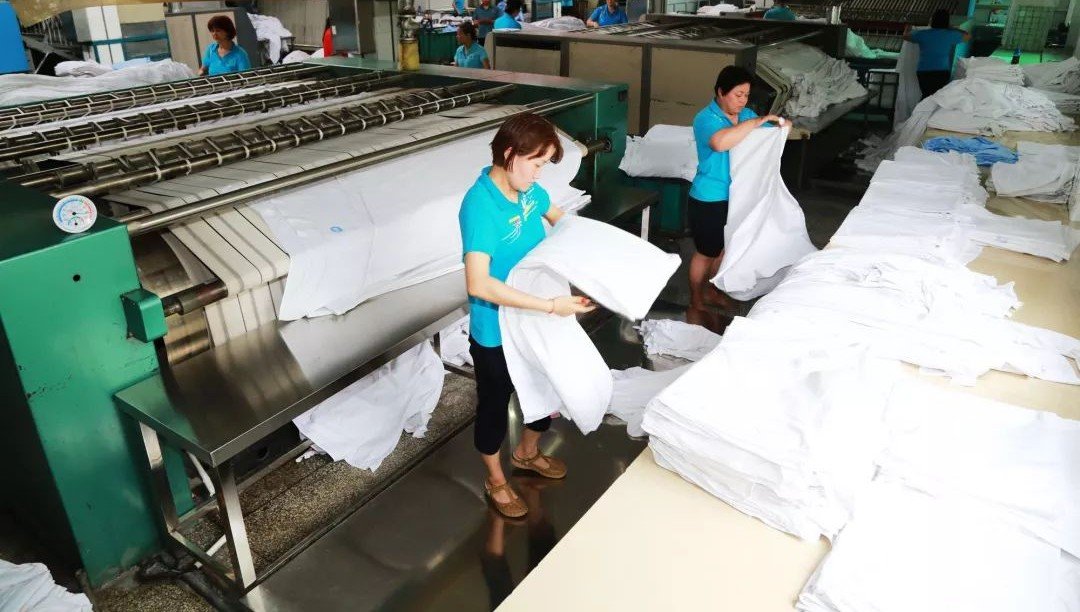
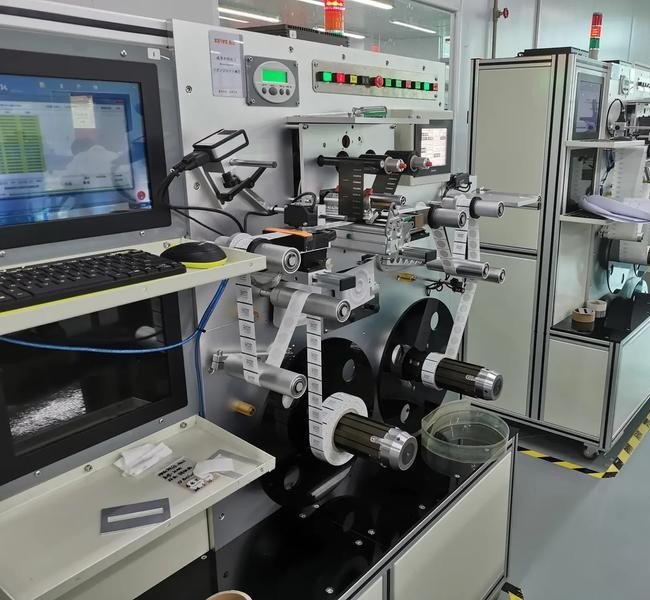
Our Jiangmen manufacturing facility handles key production processes, including bonding, lamination, die cutting, laser marking and RFID encoding, helping us maintain control over product customisation and production quality. A change of size, chip or marking is scheduled on our own line.
 Bonding · lamination · encode & read-back
RFID Laundry Tags for Different Textile Applications
Our RFID laundry tag range includes flexible textile RFID labels and rigid PPS RFID tags. Each solution is designed around different textile constructions, installation requirements and industrial laundry conditions.
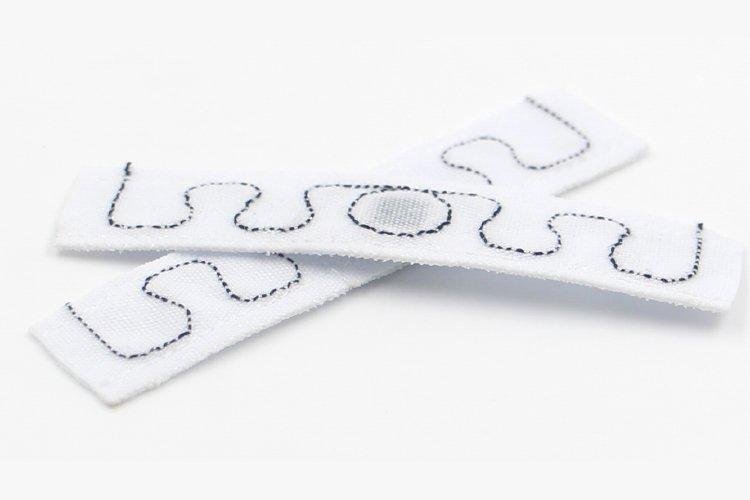
Sewn-in & Heat-Seal Textile RFID Labels
Flexible UHF RFID textile labels for item-level identification in industrial laundry — our highest-volume line, and the format most laundries run.
- Sewn-in installation for integration into linen hems, seams and garment folds
- Heat-seal installation for compatible fabrics using controlled heat-press processes
- Flexible, low-profile construction designed for textile integration
- Custom label dimensions, RFID chip options and EPC encoding
- Model-specific specifications for industrial washing, drying and flatwork finishing processes
- FamilyTextile RFID Laundry Labels
- FrequencyUHF 860–960 MHz, by model and region
- InstallationSewn-in · heat-seal (heat-press)
- ConstructionFlexible textile label, low profile
- WashingModel-specific wash-cycle validation
- Flatwork finishingModel-dependent; confirm ironing temperature, pressure and process
- TemperatureRefer to model datasheet
- MOQ · lead500 pcs · 1,000 in 2 days · 50,000 in 8 working days
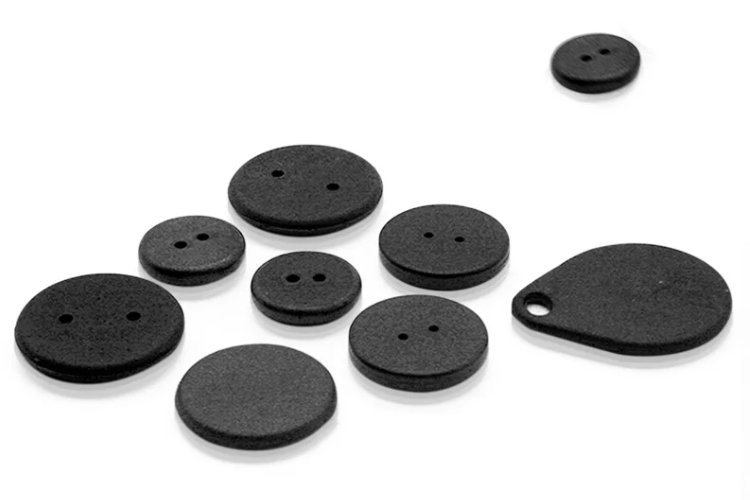
Rigid PPS RFID Laundry Tags
Rigid PPS RFID tags designed for textile identification and tracking in demanding commercial and industrial laundry environments.
- Durable PPS housing in rigid button, disc and eyelet formats, subject to model availability
- Suitable for installation in garment pockets, loops and textile pouches
- Model-specific options for high-temperature washing and industrial laundry processes
- Chip options across all three bands: UHF (by model), HF I CODE SLIX, LF TK4100 / T5577
- Custom dimensions and configurations to match garment construction and tracking requirements
- FamilyRigid PPS RFID Laundry Tags
- FrequencyUHF 860–960 MHz · HF 13.56 MHz · LF 125 kHz, by model
- MountingPocket · loop · textile pouch
- ConstructionRigid PPS housing, button · disc · eyelet
- Wash conditionsModel-specific; confirm temperature and chemistry against the tag specification
- TemperatureRefer to model datasheet
- MOQ · lead500 pcs · 1,000 in 2 days · 50,000 in 8 working days
Frequency, chip, wash-cycle rating and temperature limits differ between models. Every technical figure in a quote is checked against the datasheet for the model you select — not carried across the range.
- ◆Data written and read back on every piece — EPC on UHF models, block and sector on HF / LF
- ◆Custom dimensions and chip selection
- ◆Laser marking, printed logo or blank face
- ◆UHF textile is our highest-volume line; PPS covers UHF, HF and LF by model
| Comparison | Sewn-in textile | Heat-seal textile | Rigid PPS |
|---|---|---|---|
| Tag construction | Flexible textile label | Flexible textile label | Rigid PPS housing |
| Installation | Sewn into hem or seam | Heat-sealed onto compatible fabric | Pocket, loop or pouch |
| Typical application | Hotel linen and uniforms | Compatible linen and garments | Workwear and reusable textiles |
| Finishing compatibility | Model-dependent | Model-dependent | Model-dependent |
| Process suitability | Confirmed against wash profile | Confirmed against fabric and heat-press process | Confirmed against temperature and chemical exposure |
Browse all RFID laundry tags →
Pick the tag by where it gets read
No two laundries read tags in the same place — soil belt, chute, sorting conveyor, dock. The tag and the fixing follow that read point; everything after it is a drawing and a sample.

Hotel linen & hospitality
Terry, sheeting and bathrobes, tagged in the hem. Counts are taken at the housekeeping trolley and the dock, so par levels come from item data instead of a manual tally at month end.
Textile labels for hotel linen →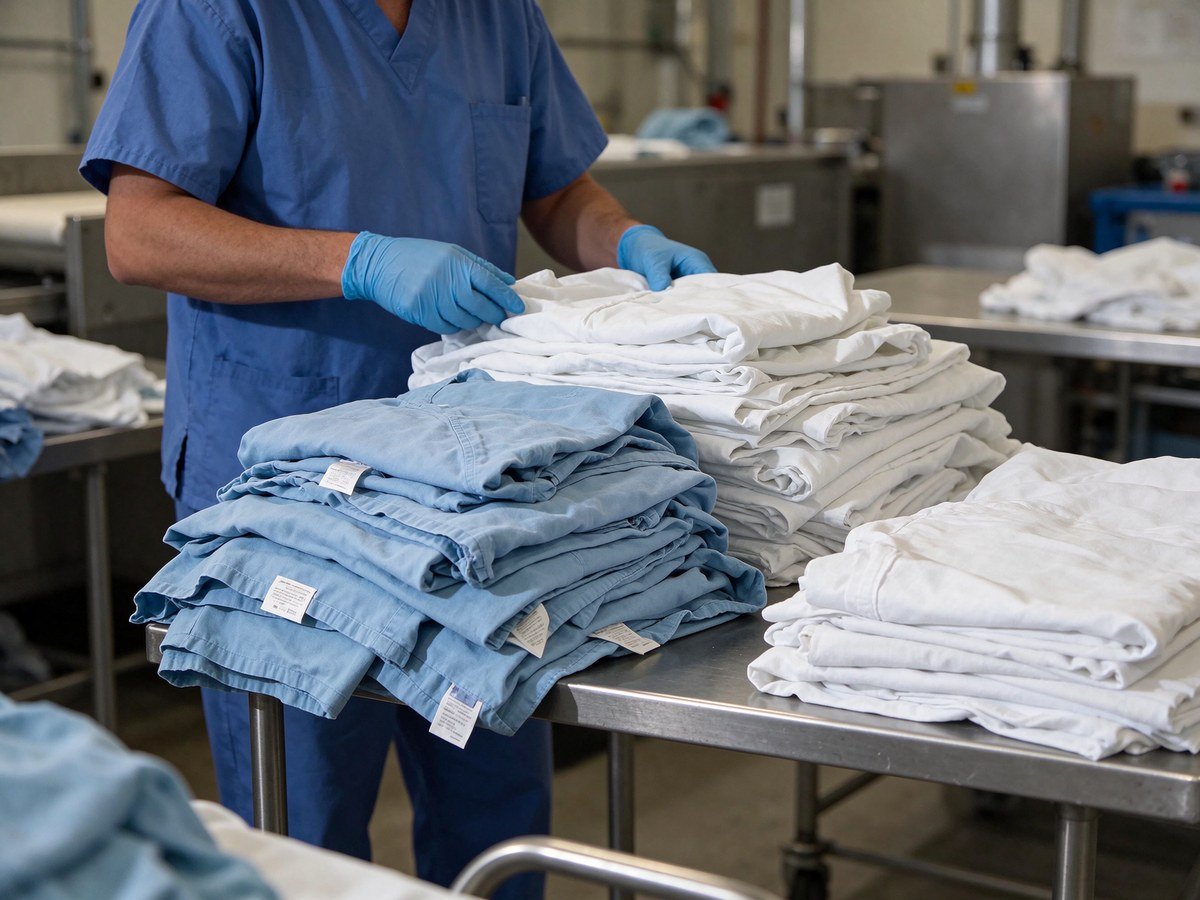
Healthcare & hospital textiles
Scrubs, sheets and patient gowns are read at the chute before thermal disinfection and again at issue. Each load stays traceable to the ward that sent it, without a paper count.
Textile labels for hospital textiles →Industrial & commercial laundry
Tunnel washers, high-pressure presses and flatwork ironers are where tags actually die. Read once on the soil belt and once at the clean end, and loss shows up on the line rather than in the stocktake.
PPS tags for industrial laundry →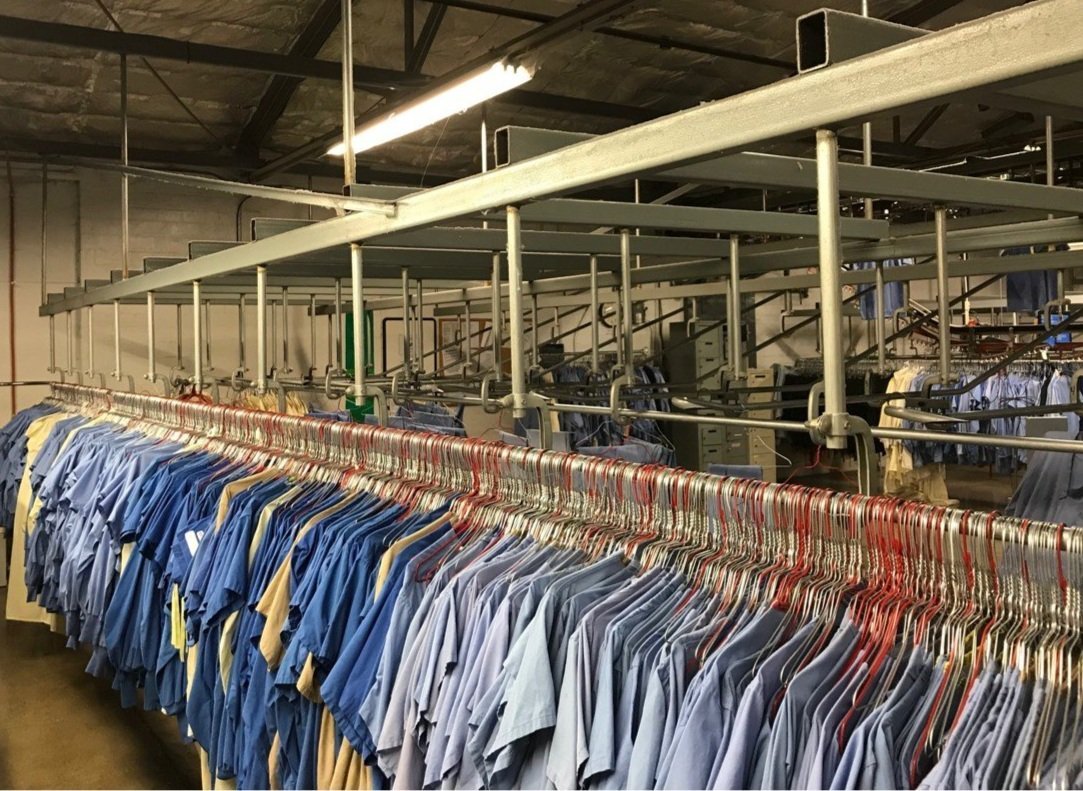
Uniform & textile rental
Garment-level ID ties the item to a wearer and a route. The sorting conveyor reads the chip and drops it into the right bin — no barcode scan, no operator keying in a number at the end of a shift.
Clothes tags for uniform rental →RFID tags provide item-level identification. Automated sorting, inventory management and reporting depend on the reader infrastructure and software system.
Three ways to install a laundry tag
Three fixing methods for three different textile situations. The attachment step and the laundry finishing step are separate requirements, and both are confirmed against the model you choose.
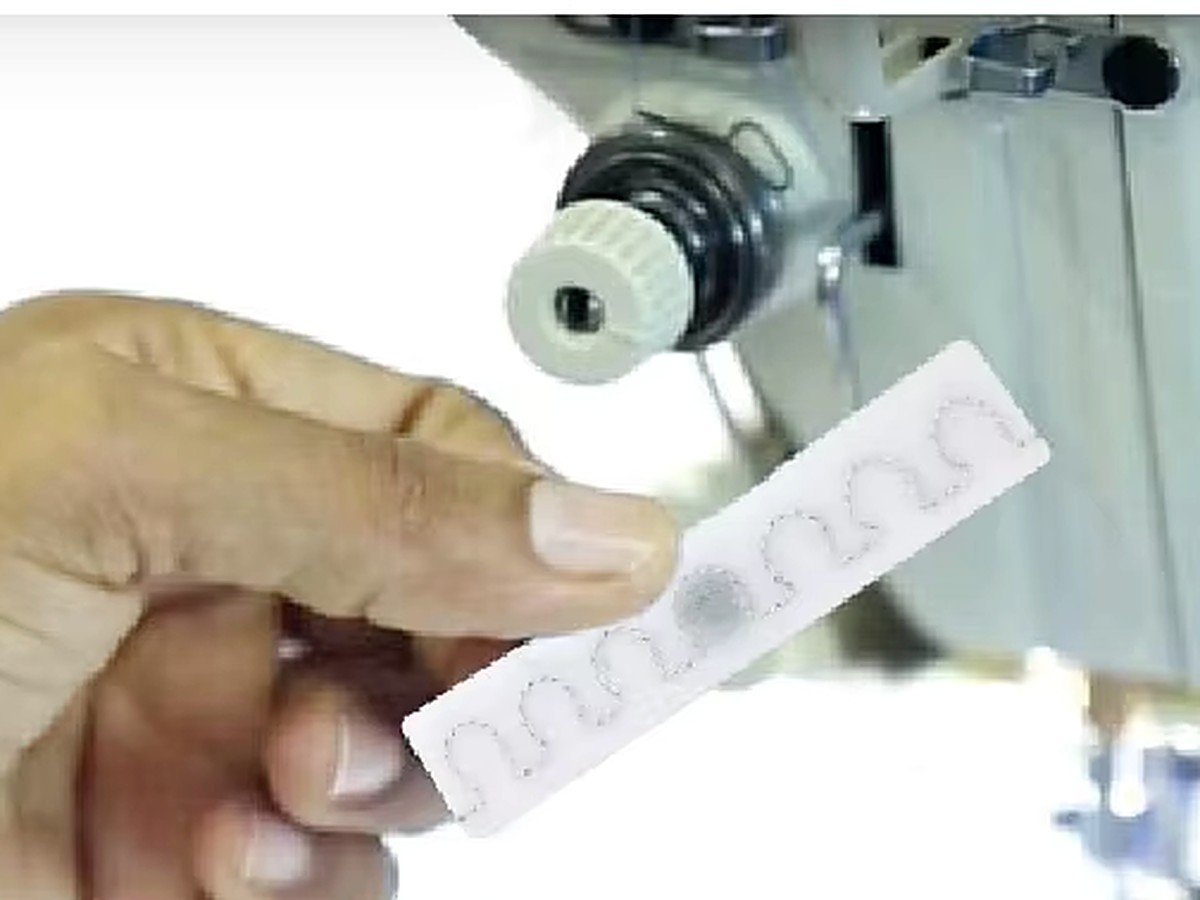
Sewn-in: into the hem seam
Lock-stitch both ends inside the hem fold and keep the needle off the antenna. The tag bends with the fabric, takes the ironer and stays invisible from the outside.
Sewn-in textile labels →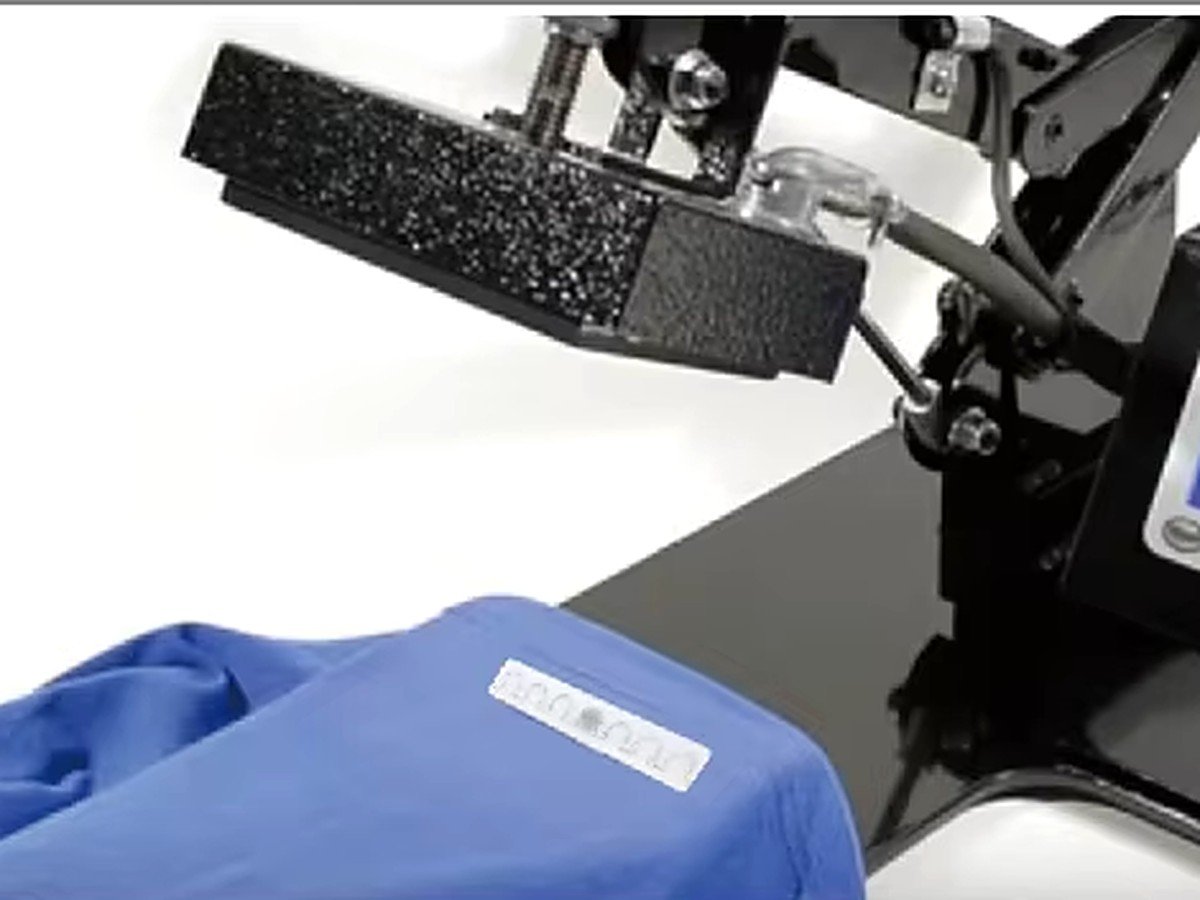
Heat-seal under a press
Seal the tag to the fabric at the temperature your fusing press already runs. Film grade and dwell time ship with the sample pack, so the first production run is not a test.
Heat-seal textile labels →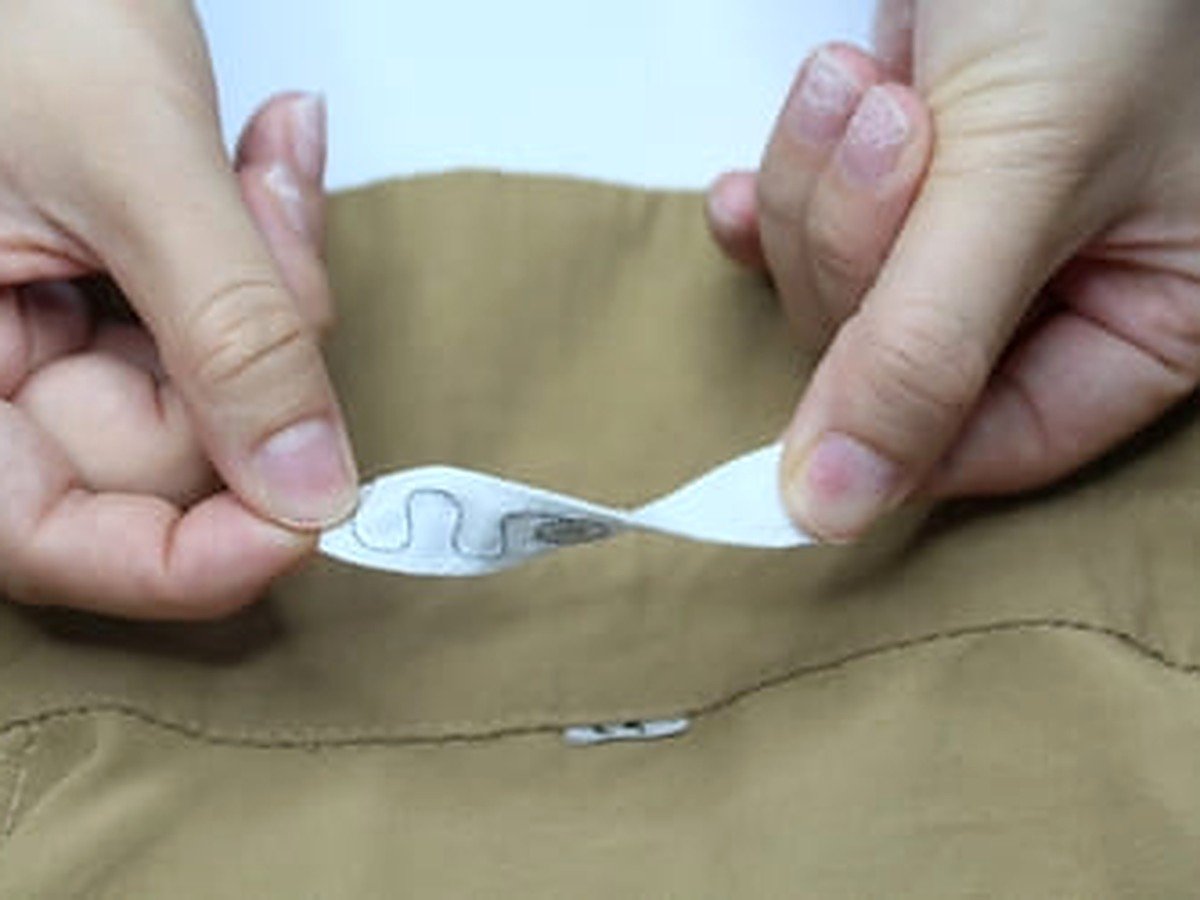
Pocket, loop or pouch
A PPS button goes into a hem pocket or a garment loop, and a textile label travels the same way where the garment has no seam to sew into. Selected PPS models are specified for demanding industrial laundry processes; temperature and chemical compatibility are confirmed against the complete tag specification and your wash recipe.
PPS pockets, loops and pouches →Heat-seal (heat-press)
Attaching an RFID textile label to compatible fabric using controlled heat and pressure. Film grade, temperature and dwell time are specified for the fabric and the label.
Flatwork ironing
A separate laundry finishing process that takes place after washing and drying. Roller temperature, contact pressure, line speed and the tag's position on the item all affect compatibility.
Heat-seal and flatwork ironing involve different temperature, pressure and exposure conditions. When selecting a textile RFID label, both the attachment method and the subsequent laundry finishing conditions should be considered to ensure compatibility throughout the intended application.
Send us five things and we return the fixing method, a drawing and a sample: garment type · wash temperature · chemistry · cycle count · reader model.
Ask an engineer →Four checks between the inlay and your carton
A laundry tag fails quietly: perfect on the bench, dead in the fourth month of a 90 °C cycle. These four checks exist to catch that before dispatch, not after the first complaint.
- 01Incoming inlay checkRead and visual check on every reel against the chip datasheet, before bonding.
- 02Lamination bond testPeel and thickness checked per lamination run, so the tag does not delaminate in the press.
- 03Encode and read-backRFID encoding and read-back verification according to the production inspection procedure — the EPC on the carton label matches the EPC inside the chip.
- 04Batch wash sampleOne sample per batch through a hot cycle, then read at the distance your gate uses.
ISO 9001 (Intertek) for the Jiangmen plant, ISO 14001 (SGS) for the Shenzhen operation, RoHS report SZXEC26005882101 (SGS, 2026) on the textile tag, and CE EMC (Anbotek) for our RFID cards. Certificate numbers and scans sit in the certificates section below.
| Sales company | Shenzhen Chuangxinji Smart Card Co., Ltd. (CXJ), since 2017 |
| Manufacturer | Jiangmen Chuangxinji RFID Tag Co., Ltd., since 2013 |
| Shenzhen office | A15 Floor, Xinhe Aiqin Ju, Buji Street, Longgang District, Shenzhen 518112, Guangdong, China |
| Factory | 6th Floor, Zhongxing 4th Road, Pengjiang District, Jiangmen |
| Capacity | 30 million RFID tags per month, across all product types |
| Team / area | 340 employees · 8,000 m² |
Paper that names our company, not a trading partner’s
All documents are issued to Shenzhen Chuangxinji Smart Card Co., Ltd., the entity on the invoice — not an intermediary. The ISO 9001 scope covers the Jiangmen plant, where the tags are made; ISO 14001 is registered to the Shenzhen operation and its renewal status is available on request; the RoHS report is an SGS test on a textile RFID laundry tag; CE EMC is held for our RFID cards, and the laundry tag range is covered by RoHS and the model datasheets. The full test report is available as a PDF on request.
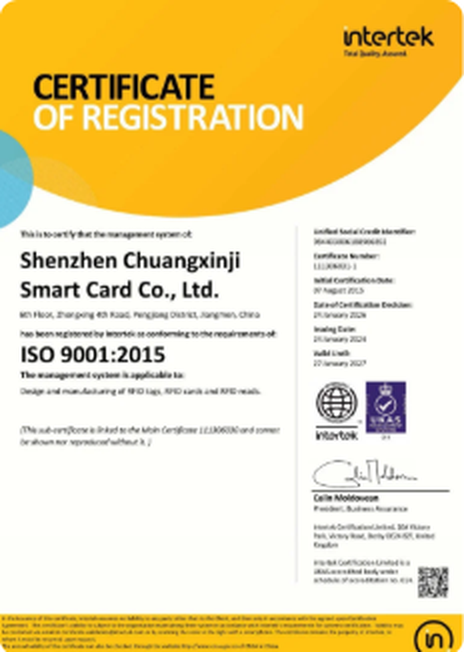
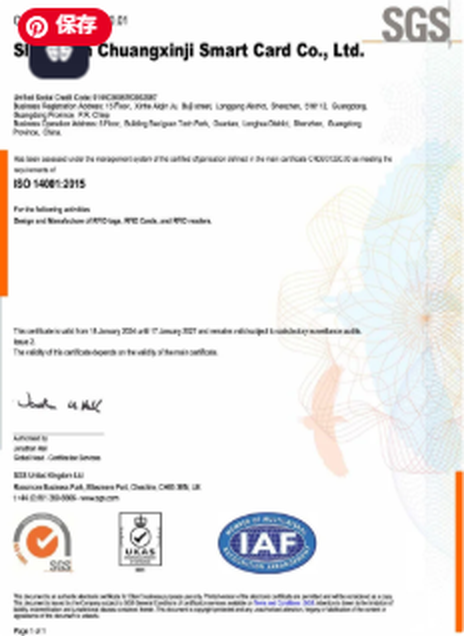
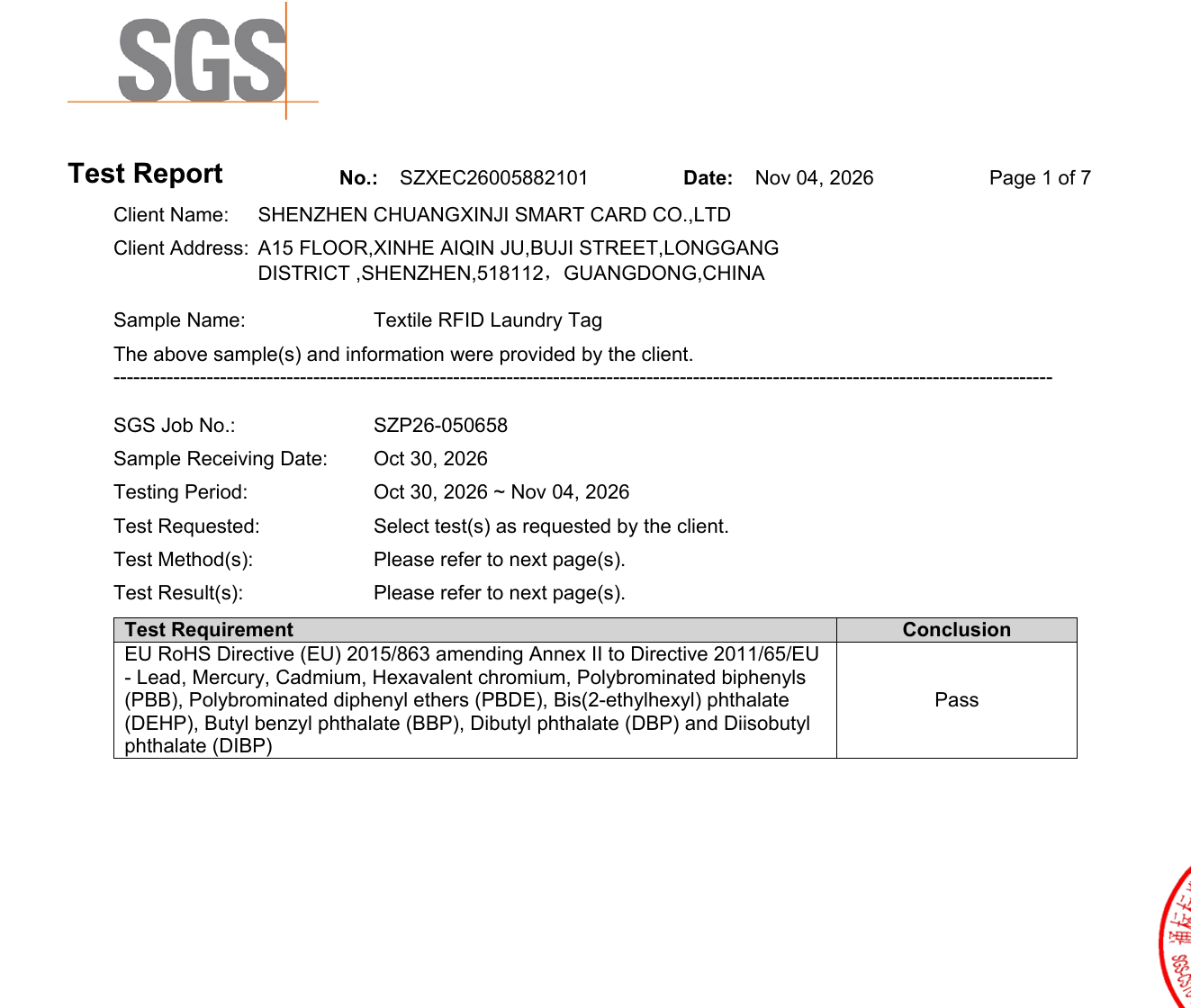
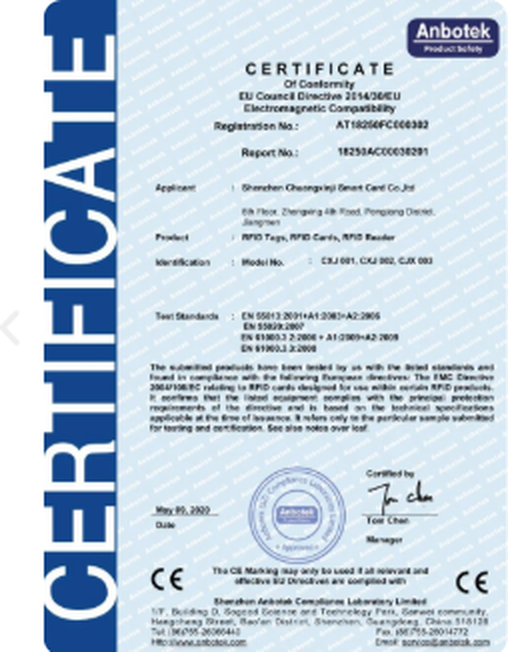
These are scans for a first look. Originals, test reports and the full scope go out with any quote, and certificate validity is confirmed at the time of quotation. Nothing on this page replaces the document itself.
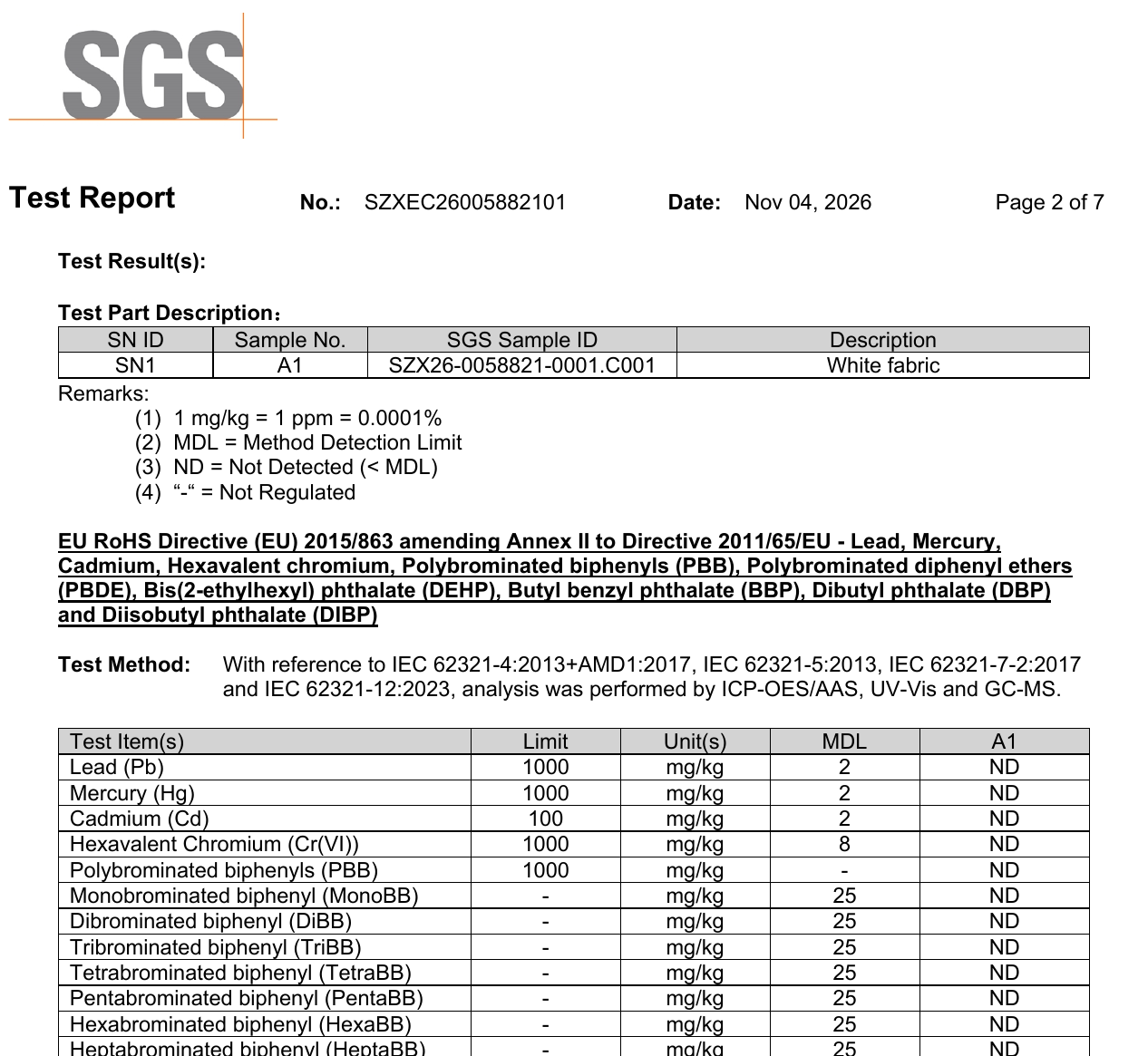
Ten restricted substances, all below the detection limit
Sample: textile RFID laundry tag, SGS ID SZX26-0058821-0001.C001 (white fabric), received 30 Oct 2026. Limits follow EU 2015/863; ND means not detected below the method detection limit (MDL).
| Substance | Limit | Result |
|---|---|---|
| Lead (Pb) | 1000 mg/kg | ND |
| Mercury (Hg) | 1000 mg/kg | ND |
| Cadmium (Cd) | 100 mg/kg | ND |
| Hexavalent chromium (Cr VI) | 1000 mg/kg | ND |
| PBB (sum of 10 congeners) | 1000 mg/kg | ND |
| PBDE (sum of 10 congeners) | 1000 mg/kg | ND |
| DEHP | 1000 mg/kg | ND |
| BBP | 1000 mg/kg | ND |
| DBP | 1000 mg/kg | ND |
| DIBP | 1000 mg/kg | ND |
Scope: material compliance only. Wash-cycle and temperature performance are covered by separate test work, not by this report. The full 7-page PDF is sent with any quotation on request.