

RFID Labels: Transforming the Retail Industry
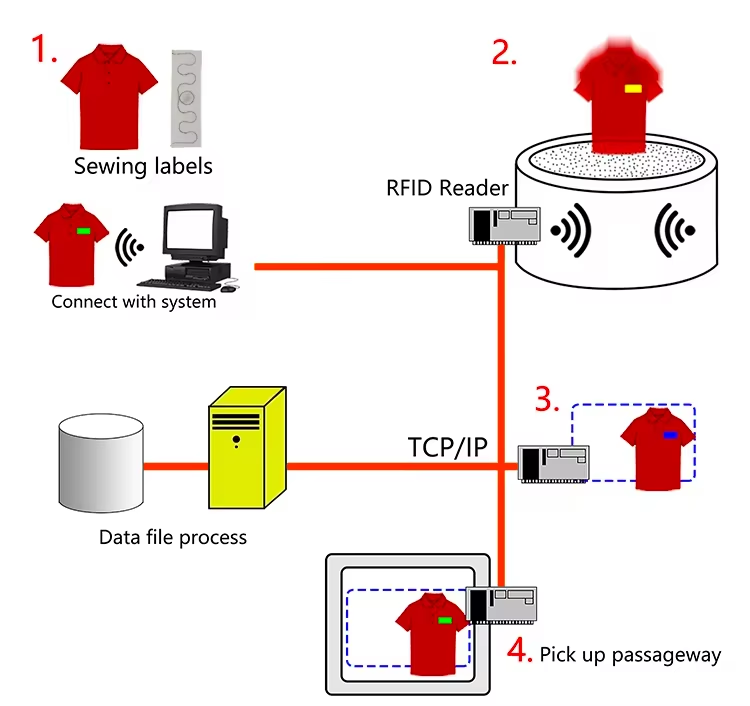
In today’s retail landscape, RFID technology revolutionizes inventory management and customer engagement, offering innovative solutions for seamless shopping experiences and efficient operations.
Efficient installation of RFID laundry tags is critical for ensuring accurate tracking, long-term durability, and smooth operation in industrial laundry environments. Whether you manage linens in hospitals, hotels, SPAs, cleaning services, retirement homes, or uniform rental companies, choosing the right installation method directly affects performance, read accuracy, and lifespan.
This guide explains the three main installation methods—heat sealing, sewn-in, and pocketing—while addressing frequent customer concerns such as tag durability, antenna protection, and washing resistance. We also introduce the UHF UCODE 9 Textile RFID Laundry Tag, engineered for high-temperature washing and long read performance.
Customers often worry about:
Tag failure after repeated washing or drying
Antenna damage during sewing
Tags falling off during industrial washing
Poor read performance caused by improper placement
Compatibility with different garment materials
By selecting the correct tag type and installation method, these challenges can be avoided—ensuring stable RFID performance for 200–300+ wash cycles.
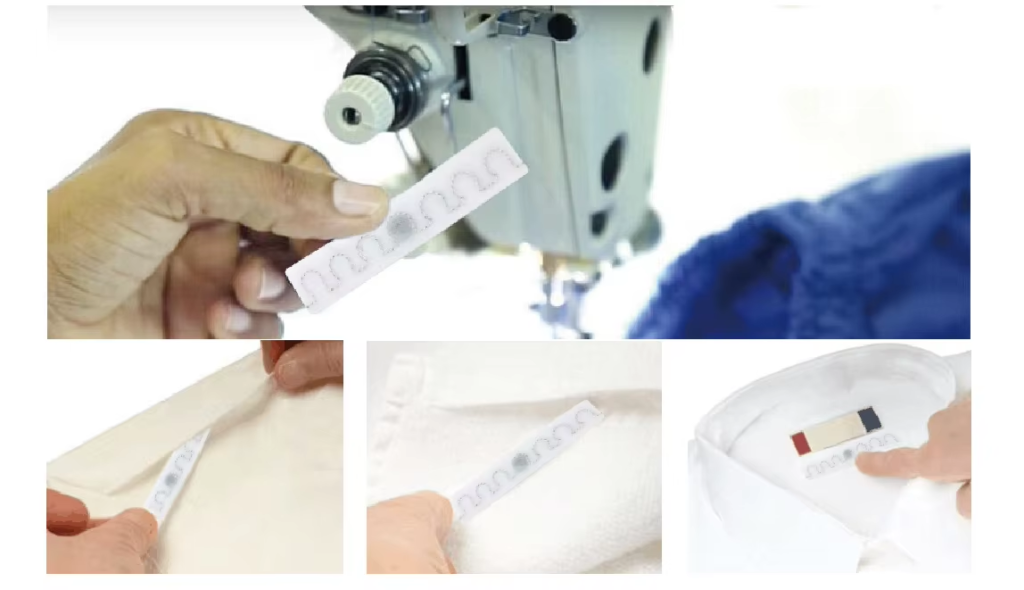
Best for: Fast, secure installation on uniforms, linens, and high-volume laundry items.
Advantages
Extremely fast for mass production
Clean, professional appearance
Strong bond when installed correctly
How It Works
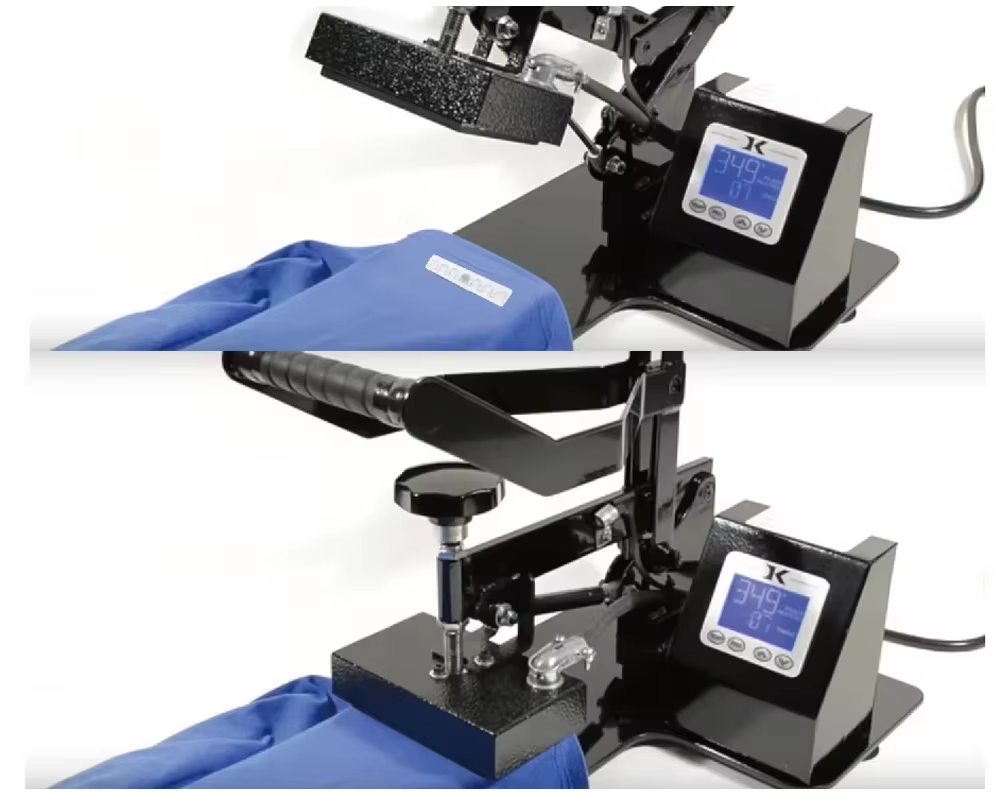
A heat-resistant RFID laundry tag with adhesive backing is pressed onto fabric using a heat-press machine. Heat and pressure activate the adhesive, bonding the tag securely to the textile.
Important Notes
Use tags designed for high-temperature exposure
Control heat and pressure to avoid damaging the chip
Not suitable for delicate fabrics
Best for: Heavy-duty use, long-term durability, items subjected to harsh washing.
Advantages
Strong attachment that withstands industrial washing
Economical installation method
Works with most textile materials
Outer Sewing:
Sew the tag directly onto the garment surface (using fabric labels). Stitch near the edge of the tag to avoid damaging the internal antenna.
Inner Sewing:
Place the tag inside the lining, hem, or a dedicated internal pocket for a discreet and more appealing look.
Key Notes
Always avoid the antenna area
Do not over-tighten the stitching
Suitable for repeated wash cycles
Best for: High-end textiles, hotel linens, sheets, or garments requiring hidden tags.
Advantages
Fully hidden installation
Maintains garment aesthetics and comfort
Tag can be replaced easily if needed
How It Works
A small pocket or opening is created in the garment. The RFID tag is inserted, then sealed with stitching or Velcro to keep it secure during washing.
Important Notes
Pocket must be properly sized
Ensure closure is tight to prevent tag from slipping out
Ideal for large linens that need discreet tracking
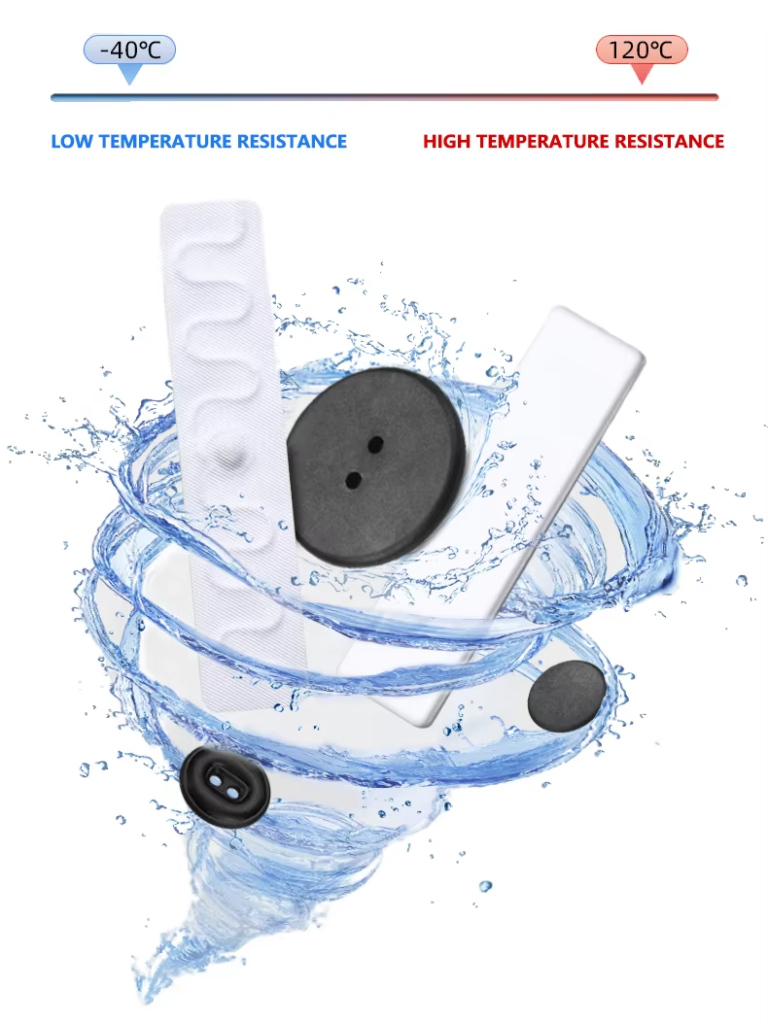
Choose industrial-grade laundry tags that are waterproof, heat-resistant, and chemical-resistant.
Avoid placing tags near metal parts such as zippers or buttons.
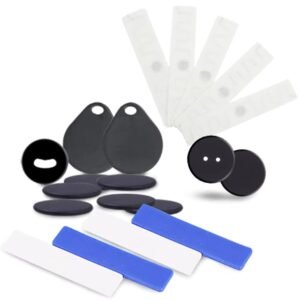
Select the tag type according to the textile: soft, woven, rigid, or flexible.
After installation, always test using an RFID reader to confirm stable performance.
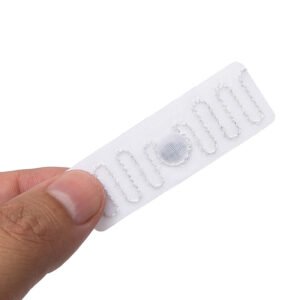
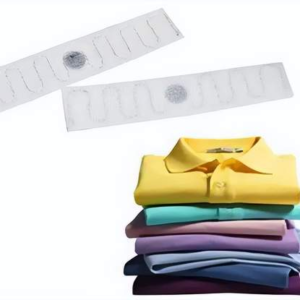
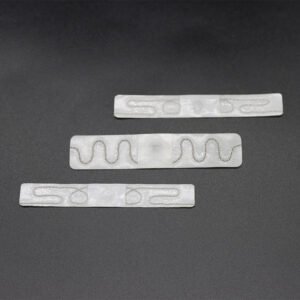
A high-performance laundry tag engineered for demanding environments such as hospitals, hotels, uniforms, and linen service companies.
| Feature | Details |
|---|---|
| Product Name | UHF UCODE 9 Textile RFID Laundry Tag |
| Material | Textile / Fabric / Woven |
| Chip Model | NXP UCODE® 9 |
| Memory | EPC 96 bits |
| Protocol | EPC C1 G2 |
| Size Options | 70×15mm, 86×16mm, 50×20mm, 72×16mm, 35×15mm |
| Color | White |
| Durability | 200–300+ wash/dry cycles |
| Operating Temp. | -25℃ to +150℃ |
| Read Distance | 3–10 meters |
| Applications | Hotel linens, hospital laundry, industrial washing, uniforms, retail apparel management |
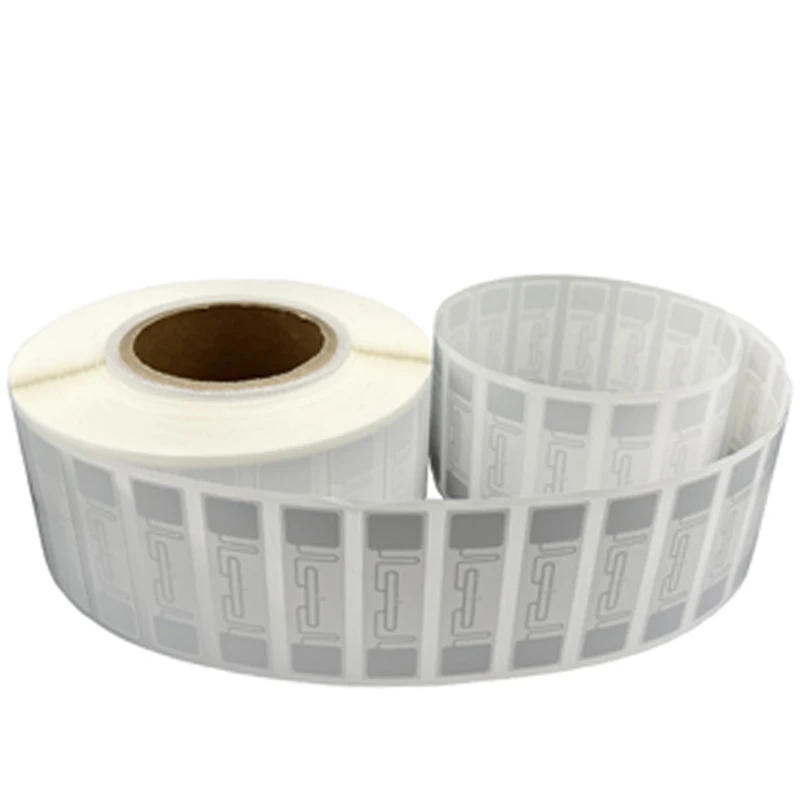
Glue backing for heat sealing
Encoding
Laser-printed numbers or logo
Ink printing
A Radio Frequency Identification laundry tag normally endures 200–300 wash and dry cycles, depending on water temperature, detergents, and installation quality.
No. Sewing is safe when stitches are placed along the outer edge of the tag and do not touch the antenna zone.
The pocketing or insert method is preferred for hotel linens because it hides the tag completely and maintains guest comfort.
Yes. Industrial-grade Radio Frequency Identification laundry tags are designed to tolerate high heat, steam, pressure, and strong detergents.
No. A properly installed Radio Frequency Identification laundry tag remains fully readable after tumble drying, steam finishing, or flatwork ironing.
A Radio Frequency Identification laundry tag generally provides a reading range of 3–10 meters, depending on the reader and environment.
Yes, but it should not be placed directly beside zippers, buttons, or other metal parts, which may block the signal.
The sewn-in method delivers the strongest attachment for workwear, uniforms, and textiles exposed to heavy mechanical friction.
Yes. Options include laser numbering, ink printing, logo printing, encoding, and adhesive backing for heat sealing.
Proper installation of Radio Frequency Identification laundry tags is essential for achieving stable reading performance, long-term durability, and reliable tracking in industrial laundry environments. Heat sealing offers fast and secure bonding, sewn-in installation provides the highest strength, and pocketing ensures a hidden and comfortable design. Choosing the right tag type, avoiding metal interference, and testing after installation are key to ensuring consistent performance through 200–300+ wash cycles.
Newest trends and common knowledge in RFID laundry tags.
In today’s retail landscape, RFID technology revolutionizes inventory management and customer engagement, offering innovative solutions for seamless shopping experiences and efficient operations.
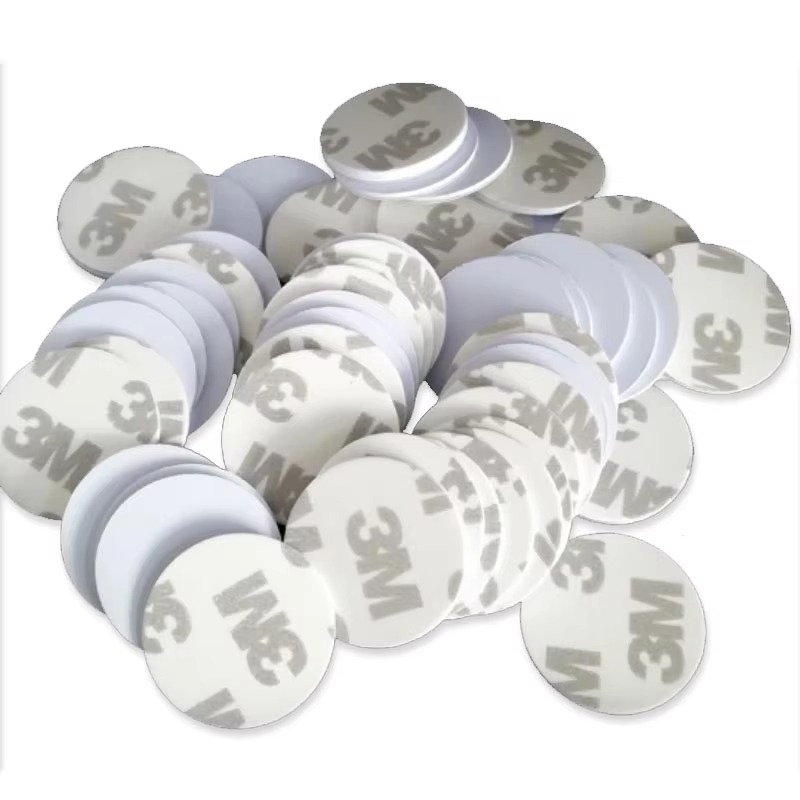
Our blank white NFC Stickers, featuring the advanced NXP NTAG215 NFC chip, are perfect for a wide range of applications.
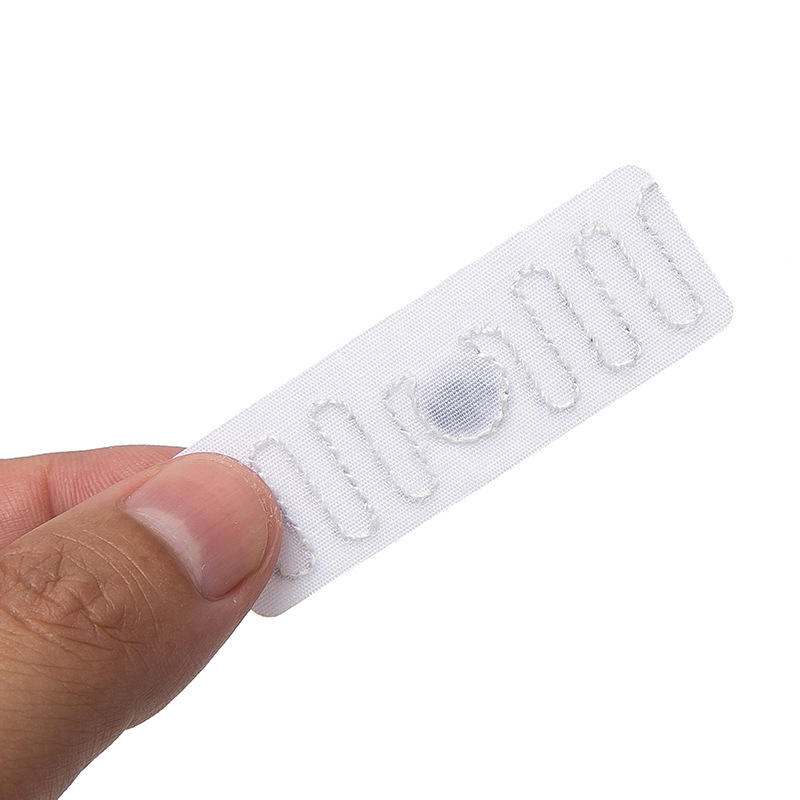
RFID laundry tags help hotels track linens, reducing costs and improving efficiency by providing real-time data for billing, inventory, and lifecycle management.
Didn’t find what you want? Ask our manager for help!