

The Benefits and Applications of Laundry RFID Wash Care Labels
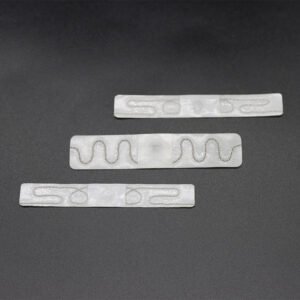
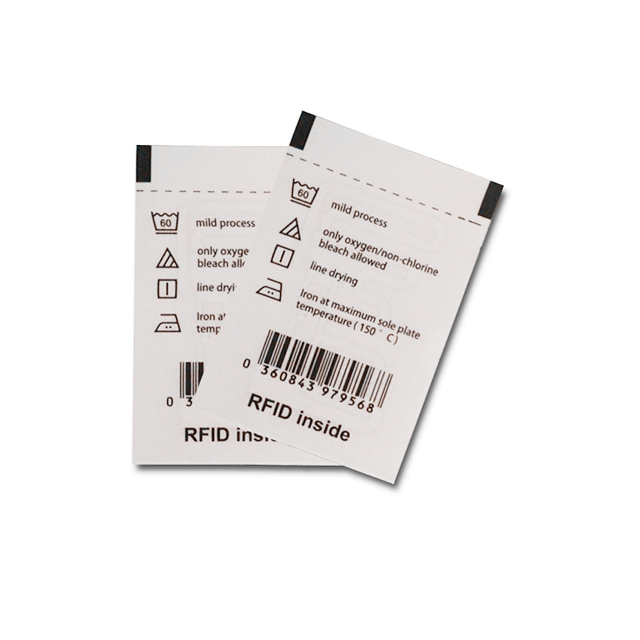
Laundry RFID Wash Care Labels offer a unique blend of traditional garment care information with advanced RFID technology.
A Practical Guide for Hotels, Hospitals, and Industrial Laundries
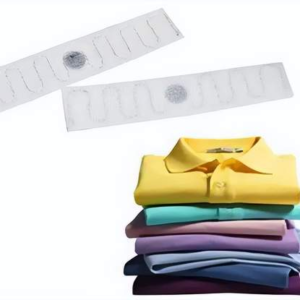
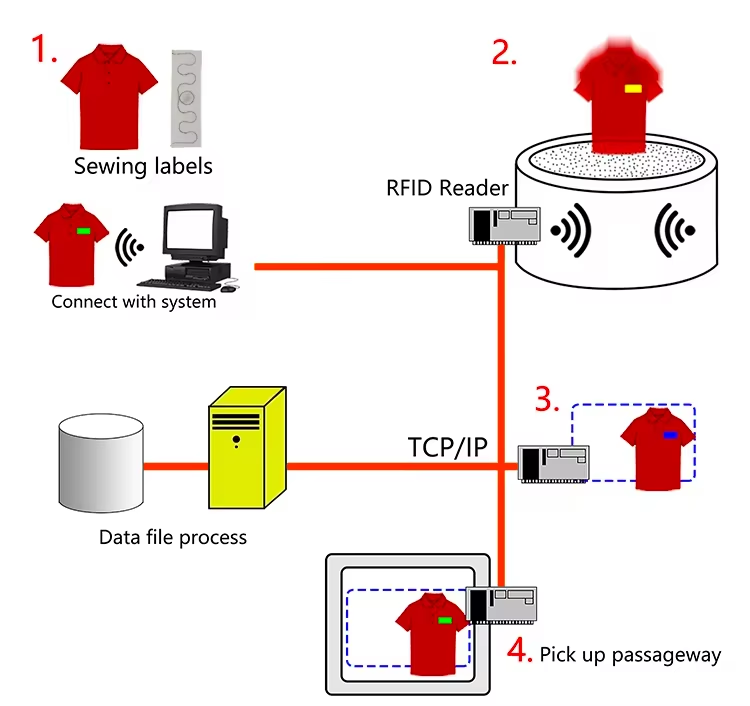
With the rapid adoption of RFID technology in laundry and linen management, more hotels, hospitals, and uniform service providers are embedding RFID washable laundry tags into each textile item. By sewing an RFID laundry tag into every piece of linen or garment, businesses can automatically track usage status, washing cycles, inventory movement, and handover records throughout the entire lifecycle of the textile.
Using RFID readers, hundreds of items can be scanned simultaneously during washing, sorting, and delivery. This not only simplifies handover processes and improves transparency, but also reduces disputes, prevents losses, and increases operational efficiency. Most importantly, by analyzing wash count data, RFID systems help predict linen lifespan and support data-driven procurement planning.
However, many customers share the same concerns:
Will sewing damage the RFID chip? Where should the tag be installed? Will it affect reading performance or fabric comfort?
This guide explains how to correctly sew RFID laundry tags into linens, step by step, while avoiding common mistakes.
Incorrect installation can lead to:
Reduced read range or unstable RFID performance
Physical damage to the chip during washing or ironing
Shortened tag lifespan
Increased replacement costs
Correct sewing ensures stable performance over 200–300+ industrial wash cycles, even under high temperature, high pressure, and chemical exposure.
This is one of the most common and cost-effective methods.
Best practices:
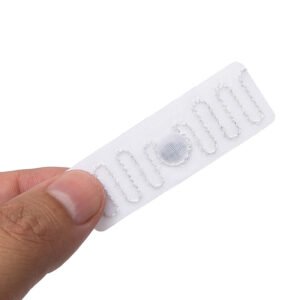
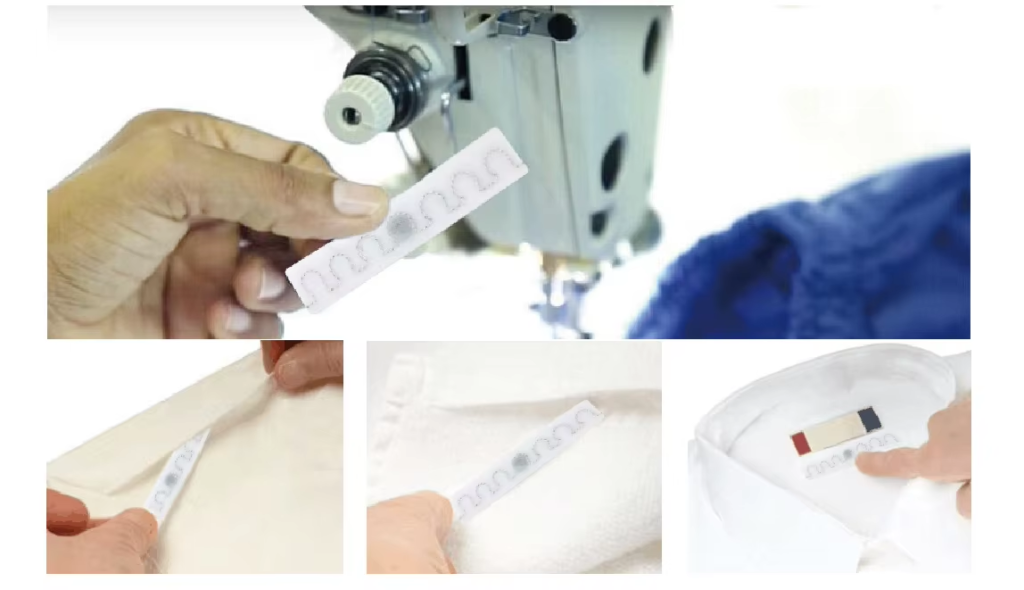
Use strip-shaped RFID laundry tags
Sew the tag into the hem or folded edge of the linen or garment
Choose a fixed, standardized location for all items to improve scanning efficiency
Key sewing guidelines:
Leave at least 0.5 cm of space at both ends of the RFID tag
Stitch only at the two ends of the tag, never across the center
Do not sew through the antenna or chip module
Ensure the tag is positioned away from folding lines
This method protects both the chip and sewing equipment while maintaining optimal RFID performance.
For customers who want extra protection or easier replacement, a fabric pouch is recommended.
How it works:
The RFID laundry tag is placed inside a textile pouch (commonly 70 × 15 mm, customizable)
The pouch is sewn securely around its edges
The pouch is installed under the hem or near the edge, not on fold lines
Advantages:
Enhanced mechanical protection
Reduced risk of needle damage during sewing
Ideal for heavy-duty hospital and industrial laundry applications
Important note:
Stitch around the pouch, never across the chip or antenna area.
Install tags near the edge or corner
Keep tags away from folding lines
Avoid areas exposed to repeated stress or tight folding
The same principles apply, but additional evaluation is recommended
Coordinate with:
Textile suppliers
Laundry service providers
End users
Special attention should be paid to sorting conveyors, tunnel washers, and inbound/outbound scanning points to ensure smooth system operation.
Sewing directly through the chip module
Stitching across the antenna area
Placing tags on frequent fold lines
Installing tags at random, inconsistent positions
Using overly tight stitches that stress the tag during washing
Avoiding these mistakes significantly improves read accuracy and tag durability.
✔ Stable bulk reading during washing and sorting
✔ Accurate tracking of wash cycles and usage history
✔ Reduced linen loss and labor costs
✔ Transparent handover and fewer disputes
✔ Predictable textile lifespan and smarter purchasing decisions
Yes. High-quality RFID laundry tags are designed to withstand high temperatures (up to 200°C ironing), high pressure, and chemical detergents used in industrial laundries.
Not if done correctly. As long as the stitching avoids the chip module and antenna area, RFID performance will not be affected.
Near the edge or corner of the textile, away from folding lines. A fixed, consistent position improves scanning efficiency.
A pouch is optional but recommended for heavy-duty applications, such as hospitals or industrial laundries, where textiles undergo frequent and harsh washing cycles.
Yes. One of the biggest advantages of RFID is simultaneous bulk reading, enabling fast sorting, counting, and handover verification.
Depending on tag quality and washing conditions, most RFID laundry tags last 200–300+ industrial wash cycles, and often match or exceed the textile’s lifespan.
Newest trends and common knowledge in RFID laundry tags.
Laundry RFID Wash Care Labels offer a unique blend of traditional garment care information with advanced RFID technology.
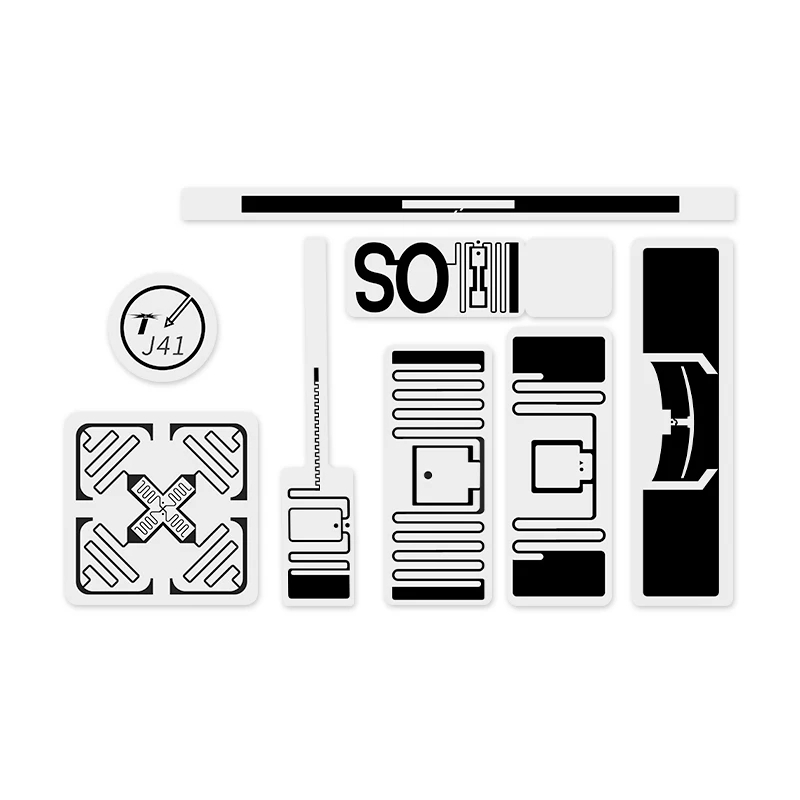
RFID labels are revolutionizing the way we track and manage inventory, assets, and even laundry.

Near Field Communication (NFC) technology has become a cornerstone in many industries, enabling quick and easy data transmission across various devices.
Didn’t find what you want? Ask our manager for help!